

 Winner · The Game Awards 2023
Fort Who?®
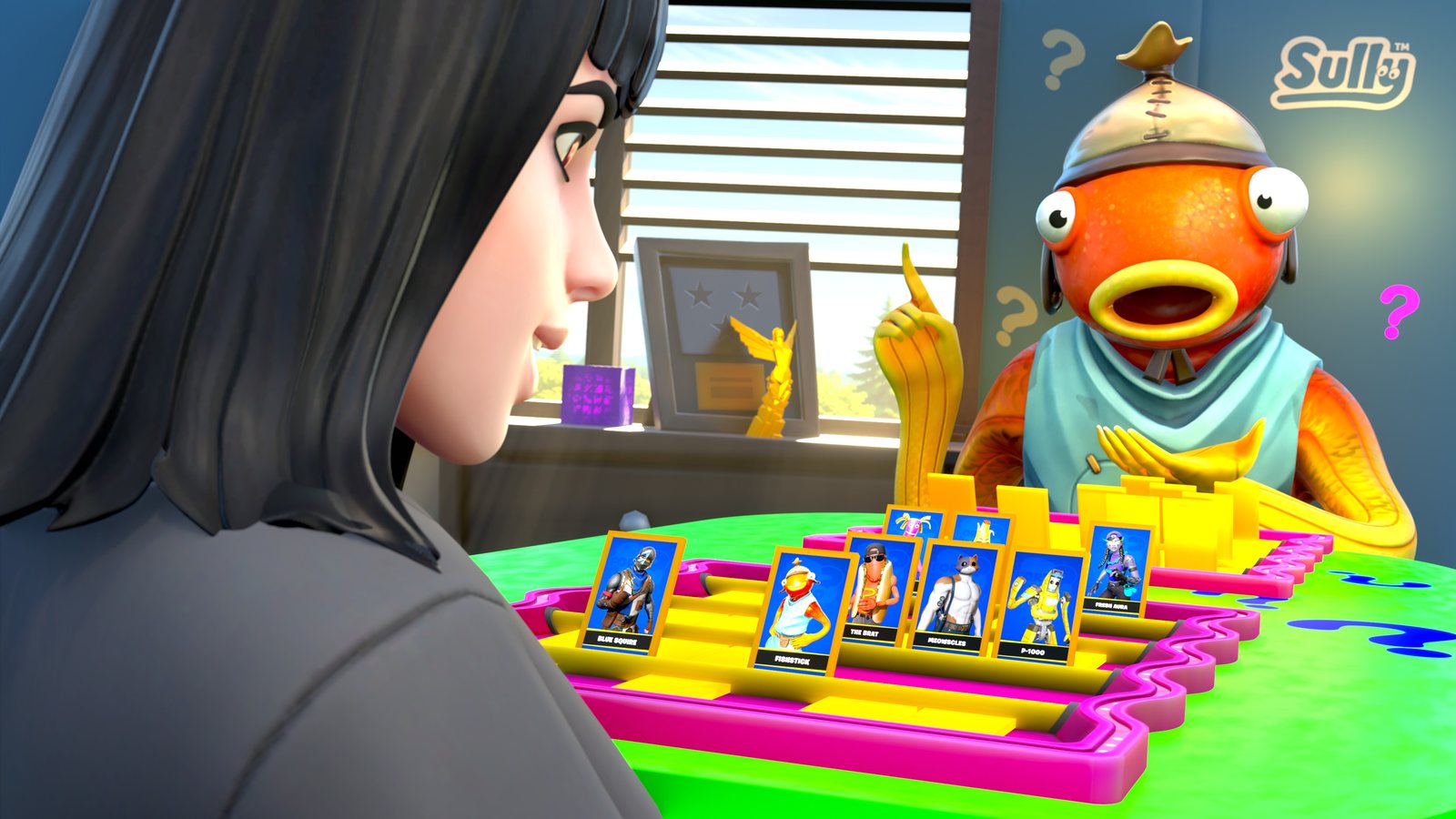
A character-deduction board game inside Fortnite. Built in Creative, rebuilt in UEFN, and played more than 65 million times since.
- 65M+ lifetime plays
- 25min average session
- 275+ releases shipped
The idea
A character-deduction board game, translated into Fortnite: two players, a board of faces each, and a turn-by-turn interrogation until someone commits to an answer. Guess wrong and you lose.
The rules are deliberately familiar; the difficulty was never the game, it was making hidden information work in an engine built for shooters.
How it was built
The original shipped in August 2022, on Fortnite Creative 1.0. Creative had no scripting language. It had devices (self-contained boxes you wire to each other), and a board game needs things Creative had no concept of: hidden information, a turn, a guess that can be right or wrong, and twenty-four pictures that are not in the game.
Three devices made it possible.
The switch could be tested, not just flipped, but read. So the board became twenty-four switches with exactly one of them on. Getting the player's guess to reach the right switch was the hard part; once it did, checking every switch and finding the single one that was on was the answer. That is the whole game, standing on one primitive.
The prop manipulator handled the cards. No animation: each card is two props, one standing and one already lying flat, with the manipulator hiding one and showing the other. Flipping a card is a swap.
The matchmaking portal solved the pictures, and it is the part nobody believes. Creative 1.0 could not import an image. The one place a creator could put custom art into the game was an island thumbnail, and a matchmaking portal displays the thumbnail of the island it points to. So the character cards are island thumbnails. I published islands that existed only to hold a picture: twenty-four characters, in two background colors so the card in your hand looked different to the ones on the board. Forty-eight islands, for forty-eight textures.
The day it broke
That texture trick depended on being able to reach a specific version of an island's thumbnail. Epic changed it so only the latest version resolved. Every card in Fort Who? went black at once, and the game was unplayable.
UEFN had shipped weeks earlier, which meant there was somewhere to go. In March 2023 I rebuilt the game on the new toolset and had it live again in about forty-eight hours; one friend took the question-bank UI, the rest was the rush. It has been growing since.
And it stopped being a magic trick. UEFN brought Verse, so the game could be written rather than wired: the twenty-four switches became state in code, the card flips became logic instead of two props swapping places, and the artwork became imported textures instead of forty-eight published islands. Every workaround the first version was built on went in the bin, and none of them is missed.
That also removed the ceiling. Cards were no longer a publishing stunt, so the deck stopped being twenty-four fixed faces: items, POIs, Fortnite animals, board customization, pointers. Everything the island has added since is downstream of the thing that broke it.
Campaigning for the award
The nomination arrived as an email from Geoff Keighley: The Game Awards were building an island of their own, there would be an award for the best Fortnite island, and mine was one of the nominees. The winner came out of a community vote: players traveled to the Game Awards island and voted there.
Which turns a nomination into a distribution problem. The people most likely to vote for Fort Who? were already inside Fort Who?, and the ballot was somewhere else.
UEFN was months old at the time and almost nobody had touched its localization settings: you could give a texture a variant per language. So I went through Fortnite's own language list and made the nominee sign thirteen times: English, Arabic, Chinese, German, Spanish, French, Italian, Japanese, Korean, Polish, Portuguese, Russian, Turkish. Whoever walked in read it in their own language.
The sign was a matchmaking portal. Reading it and going to vote were the same action: one interact, straight into the Game Awards island. The same prompt sat in the lobby and in the UI at the start and end of every round, and the Game Awards trailer played in-island as a flipbook, which was itself a trick most people had not worked out yet.





And then I campaigned in person. Through the voting window I dropped into public lobbies on the Game Awards island, stood beside Fort Who?’s vote button, and emoted with whoever came past, a screenshot each time. The collage went up as a thank-you. Geoff Keighley replied to it: “Cool!”
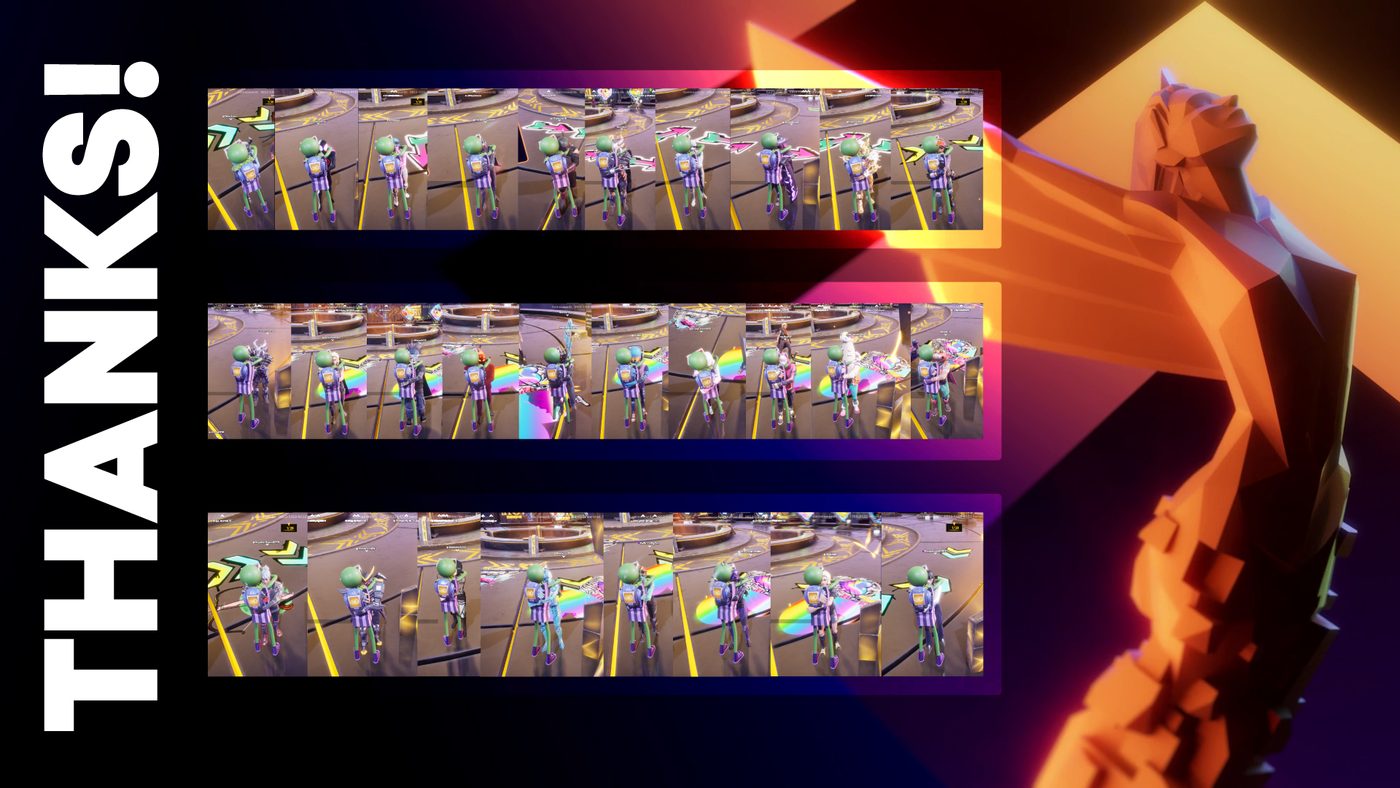
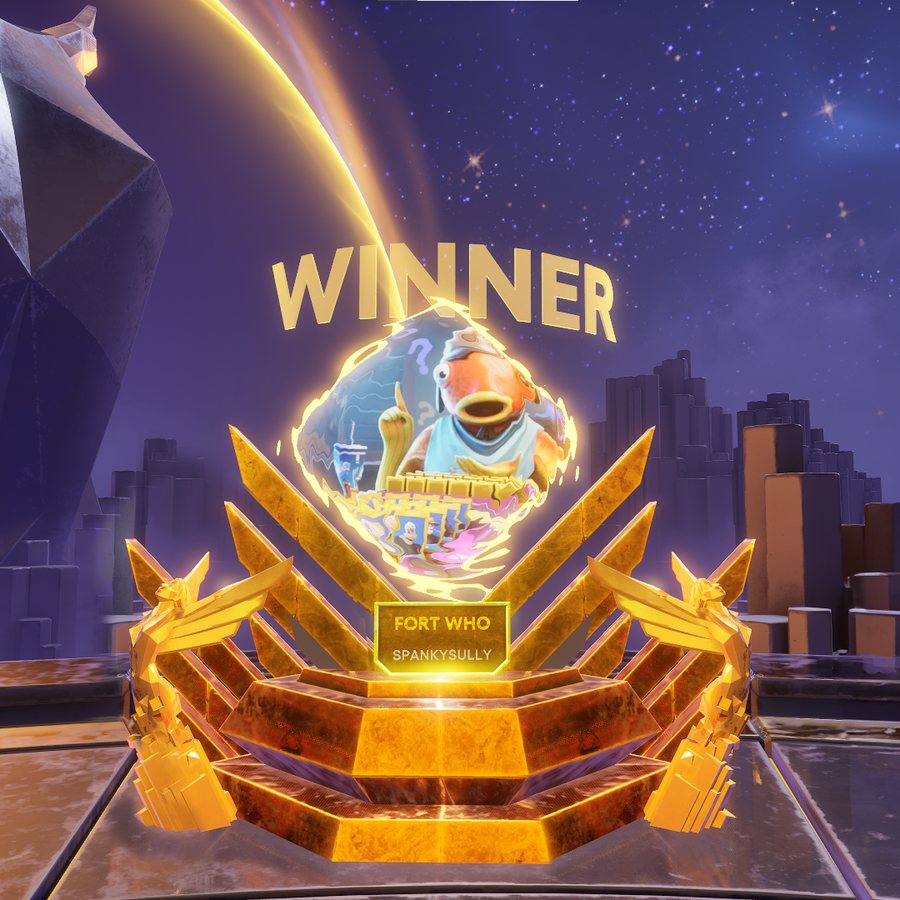
It won, announced on the broadcast that December.
Built a third time
In July 2026 I shipped Fort Who? again, rewritten on Scene Graph, Epic's newer way of building a UEFN island, where the game is a tree of entities with components rather than a level full of devices and scripts hung off it.
Nothing about the game changed for the player, which is the point: a four-year-old island, the most-played board game on the platform, moved onto Fortnite’s current foundation without a break in service. The first version survived on workarounds, the second was written properly, and the third is built the way Epic intends islands to be built from here.
The whole trajectory
Fort Who? peaked in the first half of 2024 at 13.5 million plays in six months. It has declined since. Here is every six-month period, unedited:
- H2 2023 10.5M
- H1 2024 13.5M
- H2 2024 7.34M
- H1 2025 3.27M
- H2 2025 1.73M
- H1 2026 996K
Why that happened
The decline is a distribution story, not a product one, and it did not taper, it stopped.
Through September and October 2024 Fort Who?’s Discover impressions ran between roughly 5 and 26 million a day, peaking near 43 million at the end of October. In the first days of November they fell to near zero, and stayed there for the next four months.
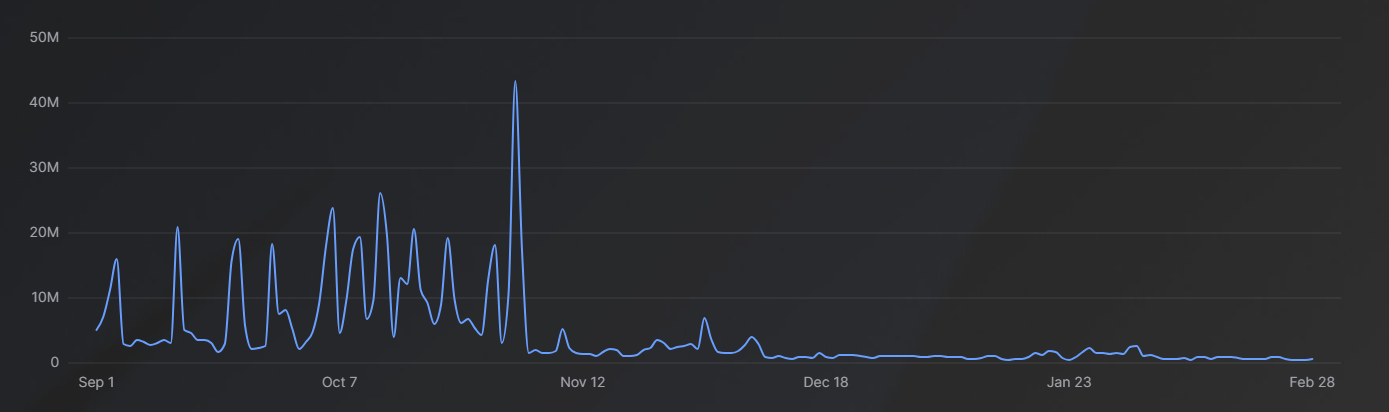
The timing lines up with Epic reorganizing Discover around Collections, where an island is surfaced within a single grouping rather than across the front of the store. Fort Who? is a board game in a storefront optimized for shooters.
It has not recovered in the twenty-one months since. Every rise above the baseline is a placement (one Epic's Picks run, a couple of good December slots), never a release. Meanwhile click-through rose from 0.92% to 3.94%, and average session length held at 25 minutes.
Far fewer people are shown the island, a much higher share of those who see it choose to play, and the ones who play stay just as long. That makes Fort Who? an under-distributed asset rather than a decaying one. Nothing about it needs rebuilding. It needs putting back in front of people.
Running it
Three years of solo operation and past release 275, and the work has been less about keeping it standing than about deciding what it is allowed to become. The rule I hold to is that additions have to give the player something without getting between them and the game.
The deck is the release cadence. A category needs twenty-four of something, so every time Fortnite ships enough of a new thing, the game gets a new board: Kicks when there were twenty-four pairs, Sidekicks when there were twenty-four pets. Seasonal boards are the same trick with a calendar attached: build a Halloween category once, switch it on every October, and the same for Christmas.
Customization went the same way: small, optional, out of the road. Board paint came first: eight colors at launch, one simple picker, the board and the cards separately. Nothing that changes how the game is played.
The rating bet
Epic said it was going to surface islands in Discover more meaningfully, weighted toward what more players could actually play. Fort Who? was rated T, for one reason: you shot the cards down with a gun. So I took the gun out, wrote a raycast system in its place (look at a card, click, it drops) and got the rating down to E.
The Discover changes never arrived, and the rating moved nothing. That bet didn't pay.
What came out of it did. Players like shooting things; it is Fortnite. So the pointers went in: toy shooters, deliberately nostalgic (foam-disc launchers, cash cannons, paintball markers), that knock a card down the way the gun used to. The E rating survives, the shooting comes back, and the second piece of customization is which pointer you carry.